The freezer drawer had frozen shut along its rails. He melted it free without forcing anything, found the drawer seal misaligned from an earlier repair by somebody else, and reset it so it closes square.
Clementine Z.2026-04-03
Independent Viking kitchen appliance repair · Ponte Vedra Beach, FL
Mon–Fri 8–6 · Sat 9–4 +1 (904) 775-7957
coastal
Gaskets take a set, ice cubes fuse into one block, pump seals dry out and grill burners collect nests. What to do before you lock up, and what to check on the day you get back.
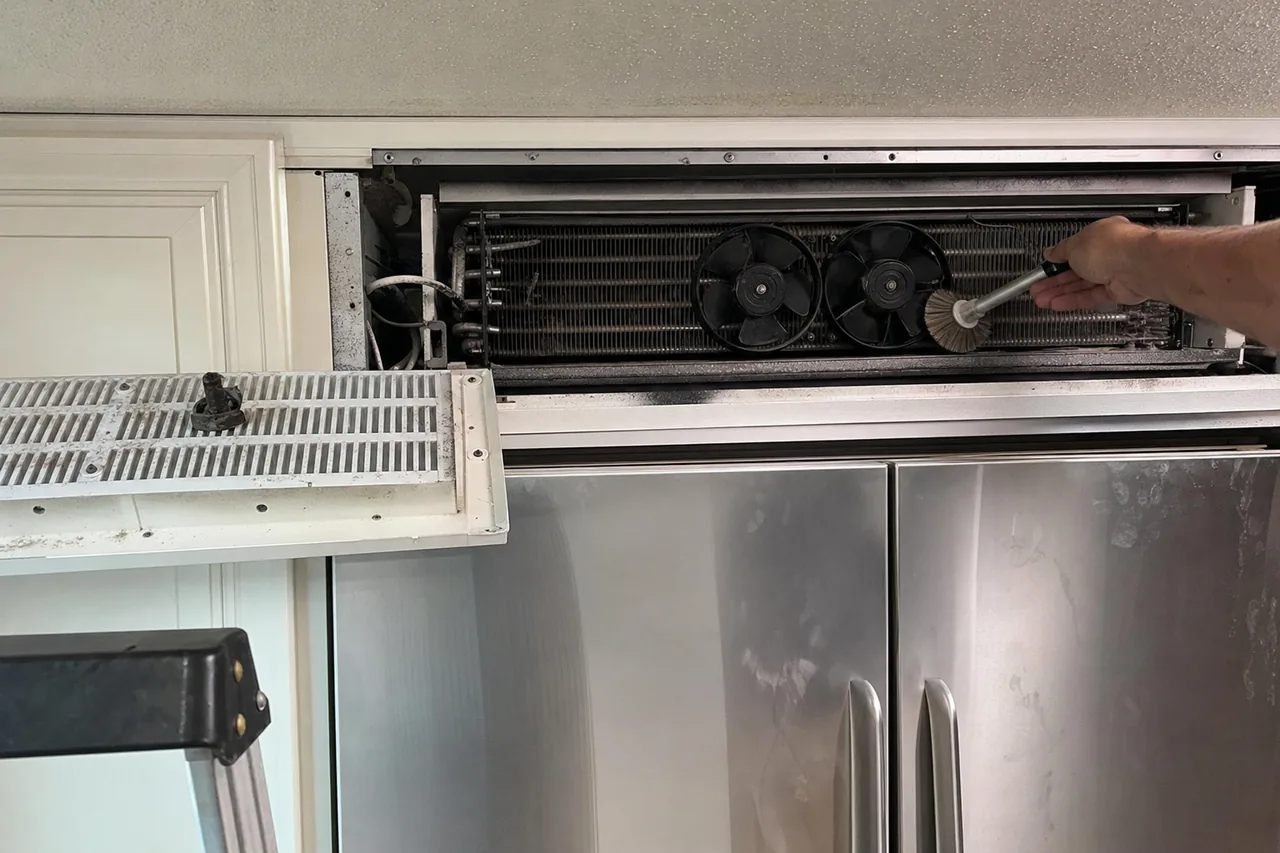
A lot of houses in 32082 are occupied for part of the year. An appliance that is switched off and shut for four months is not resting — it is ageing in a way it never does in use, and the failures are consistent enough that they can be planned for.
Everything below takes about an hour and prevents the single most common call we take in the autumn: a kitchen where three unrelated things have gone wrong at once.
Decide first whether the unit stays on. In a Florida summer, a house left without air conditioning reaches ambient temperatures that refrigeration is not designed to work against. If the house will be conditioned, leaving a refrigerator or wine cabinet running is usually fine. If it will not, switch off and empty rather than leaving a unit to run continuously against a hot cabinet.
Prop the doors. A gasket held compressed for months in heat takes a permanent set, and a gasket that has set no longer seals in the corners. Most doors have a detent or a stop that holds them slightly open; use it. This one step prevents more autumn call-outs than any other.
Clean before you leave, not after you return. Food residue in a sealed cabinet for four months in this climate creates odour that survives several cleanings and sometimes requires the evaporator area to be opened.
Turn the ice maker off, empty the bin, and let the mould dry out.
Cubes left in a bin for a season do not stay separate. They sublimate slowly, settle and fuse into a single mass, and the first harvest after you return pushes new ice against a solid block. That is how ejector arms, harvest motors and bin augers get broken by an appliance nobody used all summer.
If there is a shut-off valve on the ice maker’s supply line, close it. That also removes the risk of a slow leak behind a built-in unit in an empty house.
Run a rinse cycle, then leave the door ajar.
Two things go wrong otherwise. The pump seal and the door seal dry out, and the first cycle after a long shutdown is when a dried pump seal weeps. And a dishwasher shut damp for months grows what damp dark boxes grow.
Leaving the door ajar in a household with small children or pets is a judgement call; if that is not workable, run the rinse and close it, and expect to run an empty hot cycle before the first real load when you come back.
Close the gas at the source — the tank valve for propane, the shut-off for natural gas.
Then clean the grates and the burner area properly. A grill left with grease on it through a wet summer is an attractive place for insects, and the failure that follows is specific: mud daubers and spiders nest in the venturi tubes between the valve and the burner, which starves the air-to-gas mixture. On first light-up next season you get a lazy yellow flame across one burner and no obvious cause.
Cover the grill only once it is completely dry. A cover put over a damp unit holds a salt-laden film against the metal for months, which is the exact condition that corrodes fasteners and hinges.
Finally, unplug or isolate any outdoor refrigeration you are not leaving running, and leave its door propped for the same reason as indoors.
Little to do, with two exceptions. Wash and thoroughly dry cast-iron grates and burner caps before you leave, because salt sitting on them for a season does more damage than a year of cooking. And do not run a self-clean cycle as the last act before you lock up — a pyrolytic cycle is when marginal thermal fuses, door-lock motors and control boards fail, and you would be leaving that failure to be discovered in October.
Switch things on in order rather than all at once. Refrigeration first, so it has hours to pull down before anything goes into it. Then the dishwasher on an empty hot cycle. Then the ice maker, and discard the first two batches. Then the grill, with the hood open and the tank valve opened slowly.
If something is going to be wrong, that sequence finds it while there is still time to book a repair rather than on the evening you have people coming.
What it costs
Flat $80 diagnostic covering the visit and the full diagnostic sequence, credited toward the repair once you approve the work. After that the work falls into bands, and these are the bands that fit this page — parts and labour together, before tax. Nothing above $80 is charged until you have the written figure in your hand and have said yes to it.
| The work | Typical total |
|---|---|
| Diagnostic visit, credited toward the repair | $80 |
| Refrigeration fan or defrost system | $250–$630 |
| Compressor or sealed-system repair | $890–$2,470 |
The spread inside a band is mostly the part, not the hour: the same fault on two machines can want a sensor or a whole assembly. Where a repair would land above $2,470 we say so before ordering anything, and we say it beside what a replacement would cost rather than leaving you to look it up. The full table and what the fee buys, and where a repair stops being worth doing.
Related
$80 flat diagnostic fee, credited toward the repair when you approve the work.
90 days on our labour, 365 days on the parts we supply. Genuine OEM parts.
Questions
Owner feedback
4.2 out of 5 from 80 customer reviews. Each one below is a single visit, written by the person who paid for it. Read all 80.